Tuesday, September 10, 2019

Energy conservation: 10 ways to save energy

Last updated 1/16/2019
https://www.energysage.com


There are many different ways to reduce your household’s energy use, ranging from simple behavioral adjustments to extensive home improvements. The two major motives for conserving energy are to save on utility bills and protect the environment. Here are the ten most common ways to conserve energy and save electricity in your home, listed from the simplest to the most intensive methods.

Top 10 ways to conserve energy


1. Adjust your day-to-day behaviors
To reduce energy consumption in your home, you do not necessarily need to go out and purchase
energy efficient products. Energy conservation can be as simple as turning off lights or appliances when you do not need them. You can also use energy-intensive appliances less by performing household tasks manually, such as hang-drying your clothes instead of putting them in the dryer, or washing dishes by hand.

The behavior adjustments that have the highest potential for utility savings are turning down the heat on your thermostat in the winter and using your air conditioner less in the summer. Heating and cooling costs constitute nearly half of an average home’s utility bills, so these reductions in the intensity and frequency of heating and cooling offer the greatest savings.

There are tools you can use to figure out where most of your electricity is going in your home. A home energy monitor can help you understand which appliances are using the most electricity on a day-to-day basis.


2. Replace your light bulbs
Traditional incandescent light bulbs consume an excessive amount of electricity and must be replaced more often than their energy efficient alternatives. Halogen incandescent bulbs, compact fluorescent lights (CFLs), and light-emitting diode bulbs (LEDs) use anywhere from 25-80% less electricity and last three to 25 times longer than traditional bulbs.

Although energy efficient bulbs are more expensive off the shelf, their efficient energy use and longer service lives mean that they cost less in the long run. Energy efficient bulbs are the clear winners in terms of their environmental and financial benefits.

save on energy bills with solar

3. Use smart power strips
“Phantom loads,” or the electricity used by electronics when they are turned off or in standby mode, are a major source of energy waste. In fact, it is estimated that 75% of the energy used to power
household electronics is consumed when they are switched off, which can cost you up to $200 per year. Smart power strips, also known as advanced power strips, eliminate the problem of phantom loads by shutting off the power to electronics when they are not in use. Smart power strips can be set to turn off at an assigned time, during a period of inactivity, through remote switches, or based on the status of a “master” device.


4. Install a programmable or smart thermostat
A programmable or smart thermostat can be set to automatically turn off or reduce heating and cooling during the times when you are asleep or away. When you install a programmable thermostat, you eliminate wasteful energy use from heating and cooling without upgrading your HVAC system or sacrificing any comfort.

On average, a programmable thermostat can save you $180 per year. Programmable thermostats come in different models that can be set to fit your weekly schedule. Additional features of programmable thermostats can include indicators for when to replace air filters or HVAC system problems, which also improve the efficiency of your heating and cooling system.


5. Purchase energy efficient appliances
On average, appliances are responsible for roughly 13% of your total household energy use. When purchasing an appliance, you should pay attention to two numbers: the initial purchase price and the annual operating cost. Although energy efficient appliances usually have higher purchase prices, their
operating costs are 9-25% lower than conventional models.

When purchasing an energy efficient appliance, you should look for appliances with the ENERGY STAR label, which is a federal guarantee that the appliance will consume less energy during use and when on standby than standard non-energy efficient models. Energy savings differ based on the specific appliance. For example, ENERGY STAR certified clothes washers consume 25% less energy and 45% less water than conventional ones, whereas ENERGY STAR refrigerators use only 9% less energy.


6. Reduce your water heating expenses
Water heating is a major contributor to your total energy consumption. Other than purchasing an
energy efficient water heater, there are three methods of reducing your water heating expenses: you can simply use less hot water, turn down the thermostat on your water heater, or insulate your water heater and the first six feet of hot and cold water pipes.

If you are considering replacing your water heater with an efficient model, you should keep in mind two factors: the type of water heater that meets your needs and the type of fuel it will use. For example, tankless water heaters are energy efficient, but they are also a poor choice for large families as they cannot handle multiple and simultaneous uses of hot water. Efficient water heaters can be anywhere between 8% and 300% more energy efficient than a conventional storage water heater. Also, be sure to account for its lengthy service life of 10 to 15 years in which water-heating savings can accumulate.


7. Install energy efficient windows
Windows are significant source of energy waste, which can amount to 10-25% of your total heating bill. To prevent heat loss through your windows, you can replace single-pane windows with double-pane ones.

For homes in cold regions, gas-filled windows with “low-e” coatings can significantly reduce your heating expenses. In addition, interior or exterior storm windows can reduce unnecessary heat loss by ten to 20 percent. You should especially consider storm windows if your region experiences frequent extreme weather events.

In warmer climates, heat gain through windows may be a problem. In addition to minimizing heat loss, low-e coatings on windows can reduce heat gain by reflecting more light and lowering the amount of thermal energy diffused into your home. Depending on the climate where you live, ENERGY STAR windows can save you $20-$95 each year on your utility bills. Window shades, shutters, screens, and awnings can also provide an extra layer of insulation between your home and external temperatures.


8. Upgrade your HVAC system
An HVAC system is composed of heating, ventilation, and air conditioning equipment. Heating alone is responsible for more than 40% of home energy use. Because homes in Northern regions are
exposed to much colder temperatures during the year, ENERGY STAR gas furnaces have different specifications in the northern and southern halves of the United States.

Upgrading to a “U.S. South” ENERGY STAR certification can save you up to 12% on your heating bill, or an average of $36 per year. ENERGY STAR furnaces in the northern half of the U.S. are labeled with the standard ENERGY STAR logo and are up to 16% more energy efficient than baseline models. This translates to average savings of $94 per year on your heating bill in the Northern U.S.

Air conditioning, by comparison, isn’t a significant contributor to energy bills – on average, it only makes up six percent of the total energy use of your home. ENERGY STAR central air conditioning units are eight percent more efficient than conventional models. Air conditioning systems are usually integrated with heating systems, which means that you should purchase your new furnace and air conditioner at the same time in order to ensure that the air conditioner performs at its maximum rated energy efficiency.

Upgrades to the third component of an HVAC system – ventilation – can also improve your energy efficiency. A ventilation system is composed of a network of ducts, which distributes hot and cold air throughout your home. If these ducts are not properly sealed or insulated, the resulting energy waste can add hundreds of dollars to your annual heating and cooling expenses. Proper insulation and maintenance on your ventilation system can reduce your heating and cooling expenses by up to 20%.


9. Weatherize your home
Weatherizing, or sealing air leaks around your home, is a great way to reduce your heating and cooling expenses. The most common sources of air leaks into your home are vents, windows, and doors. To prevent these leaks, you should ensure that there are no cracks or openings between the wall and vent, window, or doorframe.

To seal air leaks between stationary objects, such as the wall and window frame, you can apply caulk. For cracks between moving objects, such as operable windows and doors, you can apply weather stripping. Weather stripping and caulking are simple air sealing techniques that typically offer a return on investment in less than a year. Air leaks can also occur through openings in the wall, floor, and ceiling from plumbing, ducting, or electrical wiring.

Air leaking out of your home is most often from the home interior into your attic through small openings. Whether it is through ducts, light fixtures, or the attic hatch, hot air will rise and escape through small openings. As the natural flow of heat is from warmer to cooler areas, these small openings can make your heating bill even higher if your attic is not sufficiently insulated. To reap the full amount of savings from weatherization, you should consider fully insulating your home.


10. Insulate your home
Insulation plays a key role in lowering your utility bills through retaining heat during the winter and
keeping heat out of your home during the summer. The recommended level of heat resistance, or “R-value,” for your insulation depends on where you live. In warmer climates, the recommended R-value is much lower than for buildings located in colder regions like the Northeast.

The level of insulation you should install depends on the area of your house. Your attic, walls, floors, basement, and crawlspace are the five main areas where you should consider adding insulation. Use the Home Energy Saver tool for recommendations based on the specifications of your home, or find general regional recommendations on the Department of Energy’s webpage on insulation.

Why conserve energy in the first place?

Energy conservation is important and beneficial for many reasons. You can save money, increase your property value, and protect the environment all through simple energy-saving measures. These are great benefits you can gain from saving energy no matter your exact motivation for conservation in the first place. By simply taking a small step towards living a more energy-conscious lifestyle, you can begin to enjoy all of the perks of being energy efficient.

Read more about the many benefits of energy efficiency and energy conservation.

Monday, August 12, 2019

How to Choose the Best LED Light Bulb for Any Room in Your Home

How to Choose the Best LED Light Bulb for Any Room in your Home


Credits: EarthLED.com

Every room in your home is different.

You likely have heard that sunlight gives us energy, but did you know that light bulbs work in a similar way? Bulbs that emit blue light waves produce serotonin, which makes us focused, awake, and alert. Bulbs that don’t emit blue light waves allow for our brain to produce melatonin, which makes us relaxed, drowsy, and ready for a good nights sleep. 
  • Lower temperature bulbs produce warm-whites, similar to a fire, while medium temperature bulbs produce neutral-whites, and higher temperature bulbs produce cool-whites or mimic daylight.
  • It is also a common misconception that the brightness of a light bulb is measured in Watts. Watts actually measure energy usage, while Lumens measure brightness.

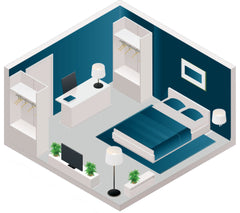
LED Lighting for Bedroom Use

LED Lighting for BedroomsIn our bedrooms, most of us want the atmosphere to be relaxed, calm, and peaceful. Avoiding blue light waves in the bedroom will keep your circadian rhythm from confusing the light in your bedroom with the natural light outside. This allows your brain to produce the melatonin needed for a comfortable sleep. Are you a nighttime reader? If you have a bedside reading lamp or plan on buying one, soft blue or neutral tones are better for reading specific fixtures, since the cool-white color creates a high contrast with the page.

Suggested Total Brightness Level - 1,500 to 4,000 Lumens
Suggested Color Temperature: 2700-3000K


LED Lighting for Home Office Use

LED Lighting for Home OfficeWhen lighting a home office, we want to make sure that the lights are maximizing our ability to be productive in the space provided. Putting cool-white lights in the office that mimic daylight will increase serotonin production keeping you focused, alert, and energized. Make sure to choose a place that won’t create unwanted glares on your computer screen. You may also want to consider LED Desk Lamps which offer great task lighting and the ability to switch color temperature on demand.

Suggested Total Brightness Level - 3,000 to 6,000 Lumens
Suggested Color Temperature: 3000-5000K


LED Lighting for Living Room Use

LED Lighting for Living RoomThe living room is a popular place to seat guests, entertain, or just kick back and relax. Whether you are watching a movie, or chatting with friends, it is important to have a mix of light sources in the living room in order to adapt to whatever the occasion may be. Like in the bedroom, it is good to avoid bright, blue-light emitting lamps that create serotonin and give us energy. Adjustable spotlight lamps can be pointed at the walls to illuminate artwork, family photos, or simply to reduce glare on the TV. Positioning spotlight lamps at walls or ceilings is also a great way to eliminate unwanted shadows. New LED 3-Way lamps can be used in all three way table lamps you may have in your living room.

Suggested Total Brightness Level - 1,500 to 3,000 Lumens
Suggested Color Temperature: 2200-3000K


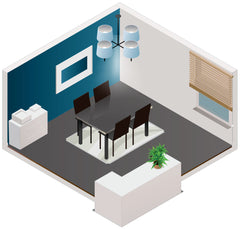
LED Lighting for Dining Room Use

LED Lighting for Dining Room UseWhen eating a nice meal with the family or guests, we don’t want the lighting to be overly bright and obnoxious, and we certainly don’t want it to be so dim that we’re dozing off. Whether it’s an afternoon brunch or a late dinner, a dimmable overhead fixtures allow for that perfect brightness at any time of day. We recommend soft to neutral tones for the dining room that create the perfect ambiance. Also, consider LED bulbs for chandelier fixtures that are commonly used in a dining room, LED chandelier bulbs now offer beautiful color and light output.

Suggested Total Brightness Level - 3,000 to 6,000 Lumens
Suggested Color Temperature: 2200-3000K

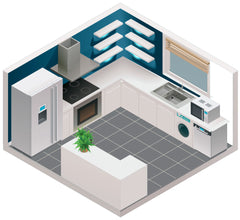
LED Lighting for Kitchen Use

LED Light Bulbs for Kitchen UseThe kitchen is in essence a workspace. Many of us start our mornings in the kitchen, so those blue-light emitting bulbs over the counters will help make us alert and awake while prepping breakfast. If you also have a table in your kitchen, a dimmable overhead fixture with a warmer color temperature can create a nice ambiance to balance out the brighter blue lights over the kitchen counters. Kitchens also can take advantage of recessed overhead lighting which can benefit from LED BR Bulbs or Recessed Retrofit Kits.

Suggested Total Brightness Level - 4,000 to 8,000 Lumens
Suggested Color Temperature: 2700-5000K

LED Lighting for Bathroom Use

LED Light Bulbs for Bathroom UseBefore we go to school or work, most of us get ready by looking in the bathroom mirror. Ideally, we want the lighting to come from around the mirror rather than on the ceiling. Using bright lights will ensure we don’t miss a spot shaving or mess up our makeup. Since many of us start the day with a shower, putting a high output surface mount retrofit fixture in the shower fixture is a great way to start waking up before tackling the day ahead. Use larger globe style bulbs to illuminate common fixtures places above and or around the mirror.

Suggested Total Brightness Level - 4,000 to 8,000 Lumens
Suggested Color Temperature: 3000-5000K

Thursday, July 25, 2019


How to Protect Electrical Appliances From Lightning Strikes


Lightning can destroy sensitive electronic appliances even if it didn't directly hit your house. Lightning strikes at power lines can send a surge of electricity down the wires and into your appliances. Household appliances running on 120-volt alternating current can handle momentary voltage surges up to 169 volts, but surges beyond that point cause damage. Lightning-induced surges can spike to several hundred volts. You can help protect your devices from lightning strikes by using surge protectors. However, in severe storms, the best protection is to unplug your appliances and disconnect phone and cable lines.

1
Install a plug-in, point-of-use electrical surge protector.
You plug this device into a grounded electrical outlet and plug your appliance into the surge protector. The protector diverts power surges to the ground connection so they don't reach your appliance. Some multi-outlet power strips have a built-in surge protector. Most electrical surge protectors have a light that indicates they are working. If the light goes out, replace the protector.

2
Use plug-in surge protectors for telephone and cable TV lines.
Lightning-induced voltage surges can travel up phone and cable lines to damage the devices and appliances connected to them. The phone and cable protectors work in the same fashion as electric-line surge protectors by sending surges to an electrical ground. They typically have plastic prongs that hold the device in an electrical outlet, and a metal grounding prong. You plug the protector into the electrical outlet; plug the phone or cable line into the "line" side of the protector; and connect the other side to your phone, television or other device. Some surge protectors also offer protection for phone and cable lines.

3
Install a service-entrance surge protector to protect your entire house from voltage surges.
Like plug-in protectors, these devices divert excess voltage to ground. Service entrance protectors must be installed by a licensed electrician. They typically go between the electric meter and the main electrical service panel. They protect the home electrical system, including appliances and devices that are hard-wired to the power source rather than plugged in. They can work together with point-of-use protectors to double the level of surge protection.

Article Credit: https://homeguides.sfgate.com

Friday, July 5, 2019

How To: Choose a Ceiling Fan

Choosing a ceiling fan is enough to make any homeowner’s head hurt. With so many variables and options, what should you consider when choosing a ceiling fan? Here are  suggestions:
By Joe Provey
How to Choose a Ceiling Fan
Photo: greathomepainting.com


Choosing a ceiling fan is enough to make any homeowner’s head hurt. With so many variables and options, what should you consider when choosing a ceiling fan? Here are my suggestions:

Get the Height Right

If  you’re planning the installation for a low-ceilinged room, insist on a flush-mount model (also called a “ceiling hugger”) to ensure adequate head clearance.

For average-height ceilings, using the manufacturer-supplied hanging rod should do the trick. For higher ceilings, an extension rod will lower the fan to optimal position within the room, about eight or nine feet off the floor.

Available in lengths from 12 to 72 inches, extension rods are for sale online and at home centers. To make sure its finish matches that of the fan, source the rod from the same company you buy the fan from.

Size Your Fan to the Room 

Blade spans range from 24 to 80 inches. The American Lighting Association suggests the following guidelines:

Room Size                                              Fan Size

ADVERTISEMENT

Up to 75 sq. ft.                                      36 inches or smaller

75 to 144 sq. ft.                                     36 to 42 inches

144 to 225 sq. ft.                                   44 to 50 inches

225 to 400 sq. ft.                                  50 to 54 inches

For very large rooms with high ceilings, fans with 60- to 80-inch blade spans are available. Large-sized fans are as much about scale as function in meeting the requirements of a large space.

Place Your Fan Properly

Ceiling fans don’t actually lower room temperatures; they cool by creating a breeze. Install them in places where you spend the most time. Good spots are over the bed or above family-room or kitchen seating.

Consider Control Options 

Do you want to control the fan from a wall switch, a remote, or a good old-fashioned pull chain? You
may not have a choice. Mode of operation depends on the fan that you choose. Tastes vary, but there is certainly something to be said for the convenience of a remote that enables you to change fan speed (or ceiling-fan light fixture settings) effortlessly.

Note: It’s a good idea to keep the ceiling fan on a separate circuit from lighting. If both are on the same circuit, you won’t be able to run your fan when the lights are off (especially important in the bedroom).

Shop Online 

The universe of ceiling fans is amazingly big! Don’t settle for the limited selection to be found in brick-and-mortar stores, especially if you need a fan with small blades or a model suited for cathedral or vaulted ceilings.


Monday, June 24, 2019

How To Size Your Chandelier

How To Size Your Chandelier


The sparkle and dazzle of a well-placed chandelier defines and enhances the mood of any room. A chandelier that is too large can easily overpower a room and its inhabitants; one that is too small becomes insignificant and decreases the perceived value of the entire space. By following a few interior design guidelines for choosing the correct size, you will maximize the impact of the fixture. Room size affects chandelier size, but the type of space also affects the size.

Follow our simple check list for the perfect fit.

1. Measure the width and length of the room. Add these two numbers together and consider the resulting figure as inches rather than feet. This is the diameter of the chandelier that will best suit the room. Allow 2 to 3 inches of chandelier length per foot of wall height. For example a dining room with 10-foot ceilings, 16 feet wide and 18 feet long, can accommodate a chandelier 34 inches in diameter and 20 to 30 inches in length. This calculation is particularly well-suited to a chandelier hanging in the center of the room and
over the major piece of furniture or focal point, as in a dining room.
2. Define the area in a large room of several conversation areas or functions with a table or area rug. Use half the table width as the diameter guideline for the chandelier over a focal point table. Use the length and width of the area rug added together and called inches as the chandelier diameter over a conversation area rug.
3. Calculate the diameter of multiple chandeliers over a focal point by dividing the diameter of the table by the number of hanging chandeliers plus 1. For example, a table 54 inches wide would be best partnered with two chandeliers 18 inches in diameter, hung 18 inches apart over the center of the table.
4. Choose a rectangular chandelier for a rectangular table that is in keeping with the proportions of the table. For example, for a table that is 54 inches wide and 72 inches long, the diameter should be 27 inches. Subtract 27 inches from the length of the table for the result of a length of 45 inches. The rectangular chandelier best proportioned to this table would be 27 inches wide and 45 inches long.
5. Consider that a stairwell has a perceived wall height of two stories and calculate the length of the chandelier accordingly. Two-story entries should be treated similarly.
6. Hang the chandelier so the bottom is no less than 30 inches from the table surface in a dining room and no less than 7 feet from the floor in a hallway or stairwell. These guidelines will affect the length of the piece, so adjust accordingly.
Blog courtesy of Burgess Lighting-Forestville, MD.

Tuesday, June 11, 2019

CHANDELIER STYLES EXPLAINED

CHANDELIER STYLES

Author: The Lighting Corner

Beyond the material composition of your modern chandelier, it’s also important to find the style that best fits your unique home. There are many styles available, each providing a unique look that is sure to be a conversation starter for guests at your table. Be sure to find a chandelier style that matches your home’s decor, but also be sure to invest in a product you truly love.

A few common styles for modern chandeliers include:


Traditional. Match the look of past chandeliers with this Neoclassic option. Decorative, refined, and elegant, these fixtures are sure to meet your needs.

Contemporary. Modern chandeliers rely on any styling from the past 100 years. Instead of ornate
elements, you’ll find durable and cost-effective products that can meet your needs and your budget.

Transitional. You can meet in the middle with transitional chandeliers that find a balance between contemporary and traditional styles. Ideally, these fixtures will provide a feeling of comfort for your home.

Industrial. There has been a growing trend for industrial chandeliers, relying on sturdy components to
create a simple and utilitarian fixture. In many cases, this minimalist design will enhance the theme of your room.

Victorian. Those looking for a luxurious lighting fixture can benefit from victorian chandeliers, boasting brass fixtures that are beautiful and intricate.

Rustic. When you think of a chandelier in a cabin, this is the style that comes to mind. Featuring iron,
wood, and a variety of big-game antlers, cabin lighting fixtures such as this can help to establish your off-the-trail style.

Crystal. The classic chandelier, this fixture is comprised of varying styles of crystal to customize the perfect look for your home. No matter what era your crystal chandelier was styled after, remember
that this classy peace is sure to dazzle guests.


Call ON-LINE Electric TODAY for your installation quote (813) 662-0362.


Thursday, May 30, 2019


BEST OUTDOOR CEILING FANS FOR HUMID REGIONS

Brought to you by: Hansen Wholesale

When the weather is nice and the temperatures start to warm up, most people want to maximize the amount of time they spend outdoors, whether that means going for a scenic hike, having lunch in the park or simply spending time in an outdoor living area. However, when it comes to using your outdoor space for lounging or dining on high-temp days, sometimes these areas can feel pretty unbearable, especially areas where it’s humid and hot. Whether you have a front porch, screened-in patio, balcony or another outdoor living area, one way to beat the heat is by adding an outdoor ceiling fan. Not only will it keep you and your guests cool and comfortable during the warm summer months, but it will also add a touch of style to your outdoor space.

INSTALL A DAMP OR WET RATED CEILING FAN

When shopping for a ceiling fan intended for outdoor use, it’s important that you check to make sure it can be used in wet or damp locations, especially if you live in a region where it tends to get very humid and moist. Look for fans that are damp rated (suitable for the outdoors but only installed in covered areas to avoid exposure to rain) and wet rated (designed for direct contact with water without the risk of damage). Whatever you do, never install a fan outside that hasn’t been rated for outdoor use. That being said, here are the best outdoor ceiling fans for humid areas.

MATTHEWS FAN CO. DONAIRE

Matthews Fan Co. Donaire
The Matthews Fan Co. Donaire ceiling fan is one of the most impressive outdoor ceiling fans we offer. Featuring a marine-grade stainless steel construction—the most durable metal any ceiling fan is made of—this fan is designed to withstand the elements without succumbing to rust. Thanks to the integrated blade design, this fan is also suitable for high-wind locations. To put that into perspective for you, this fan actually survived Hurricane Irma, which produced wind speeds of up to 177 miles per hour. If you’re looking for a ceiling fan that is designed to handle anything nature throws its way—including a hurricane—then the Donaire is the fan for you. This fan is available in several finishes, including white, bronze, and brushed stainless steel, and features optional energy-efficient LED lighting.

EMERSON SEA BREEZE

Emerson Sea Breeze
Another fan that can stand up to virtually any weather condition is the Emerson Sea Breeze Wet Location ceiling fan. This wet-rated fan can be installed indoors or outdoors and is suitable for areas that are directly exposed to the elements. Not only that, it’s ENERGY STAR® certified for greater efficiency. This fan can be ordered with or without light fixtures and comes in either an oil rubbed bronze or white gloss finishing.

MINKA AIRE XTREME H2O

Minka Aire Xtreme H2O
Industrial in size but sleek and contemporary in style, this ceiling fan is perfect for large rooms and high ceilings. The Minka Aire Xtreme H2O is the perfect fan for indoors and covered outdoor areas. It comes in 65- and 84-inch blade spans and a large selection of finishes, including brushed nickel, oil rubbed bronze, flat white, and smoked iron. This fan is UL listed for wet locations and comes equipped with a DC motor for energy-efficient use.

MINKA AIRE CONCEPT II

Minka Aire Concept II
If you’re looking for a hugger-style fan that’s UL wet rated, the Minka Aire Concept II Wet ceiling fan is ideal for low-ceiling areas. This contemporary fan features three integrated blades that make it perfect for high-wind areas and a weather-resistant UV coating for enhanced durability in outdoor areas. It also includes an integrated white opal glass LED light fixture that can be covered when not in use and comes in a variety of finishes, including oil rubbed bronze, white and brushed nickel.

MODERN FORMS MORPHEUS  III

Modern Forms Morpheus III
One of the top ceiling fans in our collection, the Modern Forms Morpheus III has it all and exceeds all our requirements for quality, airflow and energy efficiency. Featuring innovative smart technology, this fan can be easily controlled from an app on your iPhone or Android-powered mobile phone. It also comes equipped with an ENERGY STAR® certified DC motor that will help you save money on your monthly energy bills over time.
What’s more, it is wet rated and features a stylish design with vibrant LED lights, luxury opal glass, and aerodynamically quiet blades.
Need assistance choosing a fan for your outdoor living space? Call ON-LINE Electric TODAY! (813) 662-0362.

Top Consumer Tips for Choosing Electrical Contractors

1.  Always call a licensed and insured professional electrician to perform electrical repairs. Electrical work requires Specialized knowledg...

About Me

My photo
On-Line Electric is the premier choice in residential and commercial electrical in the greater Tampa Bay area including St. Petersburg, Ruskin, Riverview, Brandon, Valrico, Clearwater and more. With 39 years of service and a professional, experienced staff, we deliver only the highest quality results! Providing solutions to your electrical problems and as well as the means for new electrical appliances/equipment in your home or business is our forté. We are highly skilled electricians in residential services, renovations, and in the commercial field, from service calls to town-home construction projects.